A Problem Spotter
Notices everyday frictions at home, school, or in the community and wants to fix them.
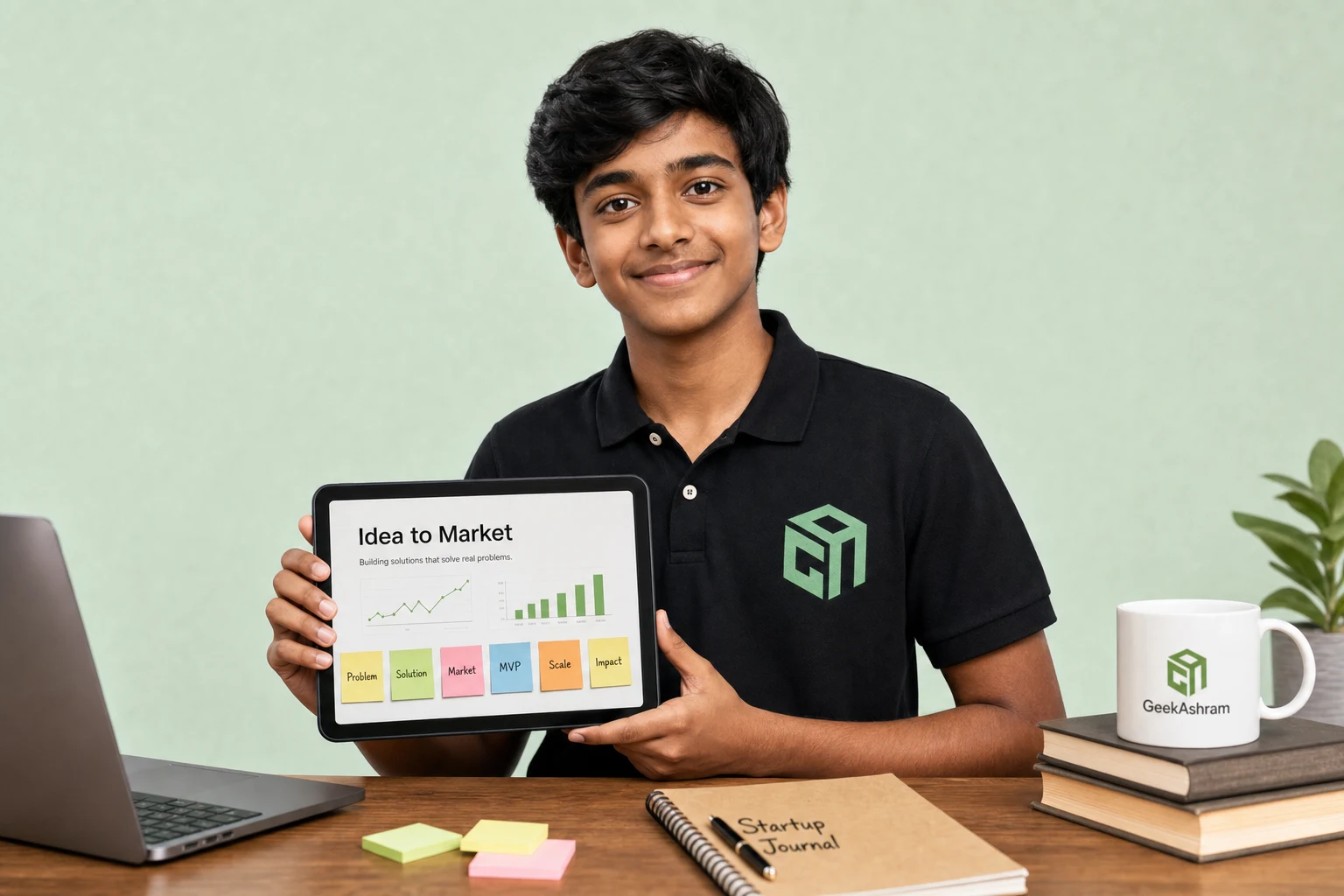
30-hour Startup & Entrepreneurship Program — from idea to market for Class 6–12
₹199 trial session · 45 minutes live
 30 Classes
Notices everyday frictions at home, school, or in the community and wants to fix them.
Dreams of building something of their own — Borders, services, or digital products.
Wants to pitch ideas clearly, talk to customers, and present on stage or online.
Ready for design thinking, business basics, and India's startup ecosystem.
Tap each module to explore classes, homework, and what your child will build — from first problem notes to Demo Day pitch.
Note 20 problems from home/school
Interview family about daily bottlenecks
Week-by-week style overview of modules, topics, projects, and typical live-class time — so parents know exactly what their child will learn. Typical full-course pace: 31 live sessions.
| Module | Focus | Duration | Topics covered | Projects / activities |
|---|---|---|---|---|
| 1 | Becoming an Entrepreneur | 2–3 hours | Job vs business vs startup vs innovation; Growth mindset and learning through iteration; Problems as opportunities: needs, wants, and luxuries | Note 20 problems from home/school; Interview family about daily bottlenecks |
| 2 | Finding Ideas | 2–3 hours | Methods of finding ideas from experience and tech shifts; Brainwriting, Crazy 8, and mind-mapping; Filter matrix: passion, skills, market size, and impact | Generate 50 startup concepts; Filter down to Top 3 ideas |
| 3 | Customer Discovery | 2–3 hours | User vs customer vs decision maker; Neutral interview questions and unbiased feedback; Problem validation with simple surveys | Customer persona sheet; Interview 10 potential customers; Collect 15 survey responses |
| 4 | Design Thinking | 2–3 hours | Empathize, Define, Ideate, Prototype, Test; SCAMPER and the 5 Whys; Paper MVPs, Canva, and Figma mockups | Build a no-cost visual prototype / MVP |
| 5 | Business Fundamentals | 2–3 hours | Value proposition canvas; Business Model Canvas (9 sectors, youth-friendly); Fixed vs variable costs, pricing, and margins | 1-page business model; Expense list for 10 units |
| 6 | Branding & Marketing | 2–3 hours | Brand name, logo, and tagline; Word-of-mouth vs Instagram and WhatsApp Business; Sales skills: utility over specs | Canva logo & catchphrase; Product launch poster; Sell Me This Pen exercise |
| 7 | Technology & AI | 2 hours | APIs, maps, AI helpers, and automation in startups; Canva, Google Forms, Sheets, and LLM prompts | Outline one automation layer; Finalize digital pitch poster |
| 8 | Legal Basics | 2 hours | Sole Proprietorship, LLP, Pvt Ltd; PAN, GST, Udyam; Startup India, trademarks, copyrights, and patents; Ethics: privacy, governance, and social impact | Trademark name search; List 3 core company values |
| 9 | Funding & Ecosystem | 2–3 hours | Bootstrapping, crowdfunding, angels, VC, and grants; Atal Innovation Mission, incubators, and state cells; Student innovation challenges and Inspiration Awards | Phase 1 startup budget; Identify one challenge to enter |
| 10 | Pitch Masterpiece | 2–3 hours | Project report: summary, market size, costs, growth; 8–12 slide pitch deck in Canva; Pitching skills, webcam presence, and break-even basics | Draft report; Pitch deck; Financial estimation sheet |
| 11 | Demo Day | 3 hours · Demo Day | Mock presentation and peer review; Grand virtual Demo Day with mentors and incubators; Awards and completion credentials | Demo Day pitch & prototype showcase |
Screenshots and walkthroughs from mentor-guided Entrepreneurship builds — so parents can see the kind of work kids ship.
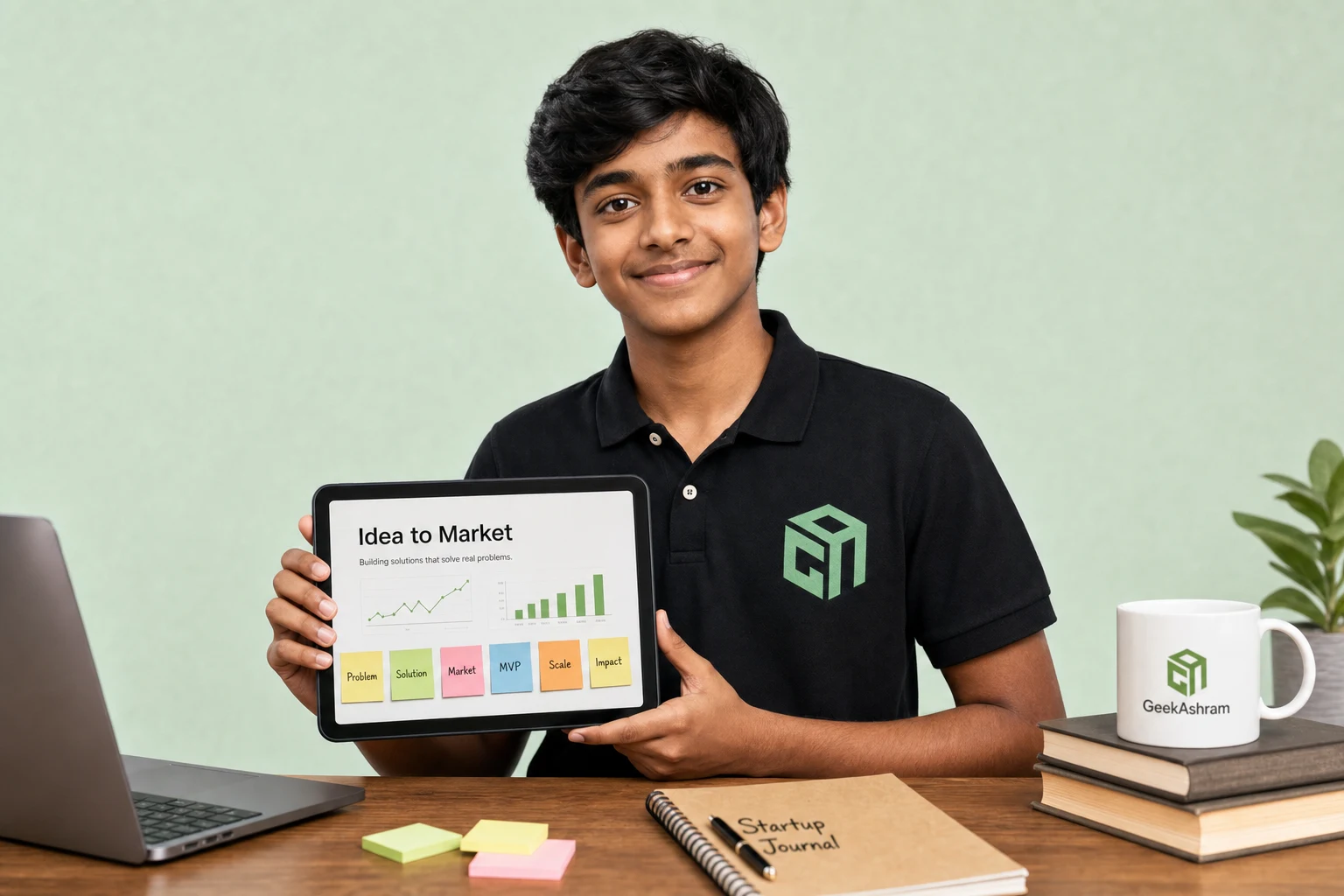
Students interview real users, document pain points, and build a paper or digital MVP to test their solution hypothesis.
A one-page business model, simple brand name/logo direction, and cost sheet — teaching pricing and positioning.
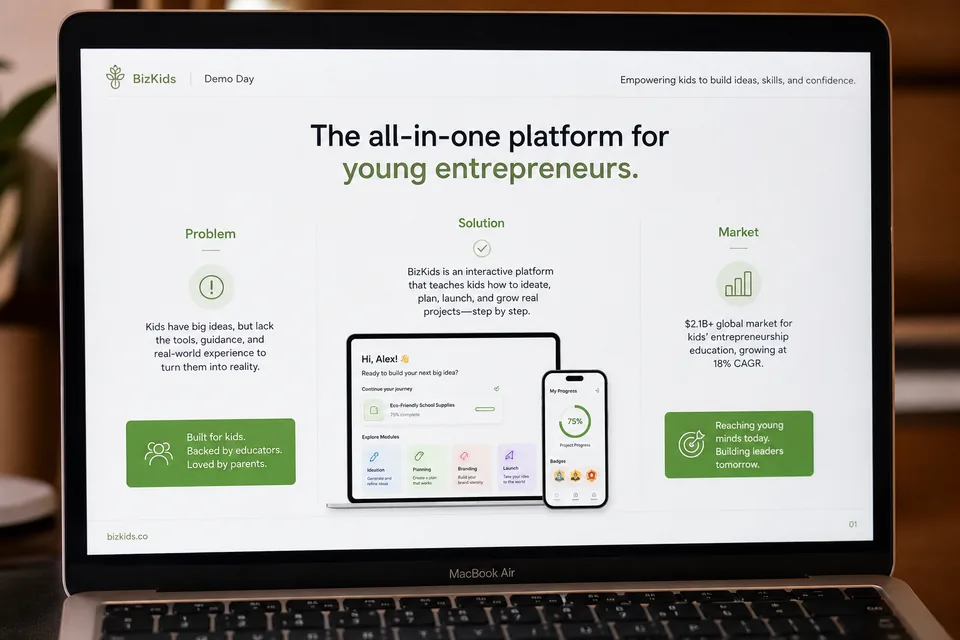
A 5–8 slide pitch covering problem, solution, market, and ask — presented live to mentors on Demo Day.
Watch a class glimpse
Designed for Class 6–12. No prior business experience needed — a laptop or tablet, stable internet, and curiosity about problems around them is enough to start. Students keep a Startup Journal throughout the course.
All plans include live mentor-led sessions, hands-on projects, and parent updates. Prices shown in INR. Try a session before choosing a plan.
₹999₹1,249 per session
Personal attention & fastest progress
View plan details →₹799₹940 per session
Small-group learning with peers
View plan details →₹499₹554 per session
Structured batch at lowest price
View plan details →Parent guides and STEM articles that pair well with Entrepreneurship.
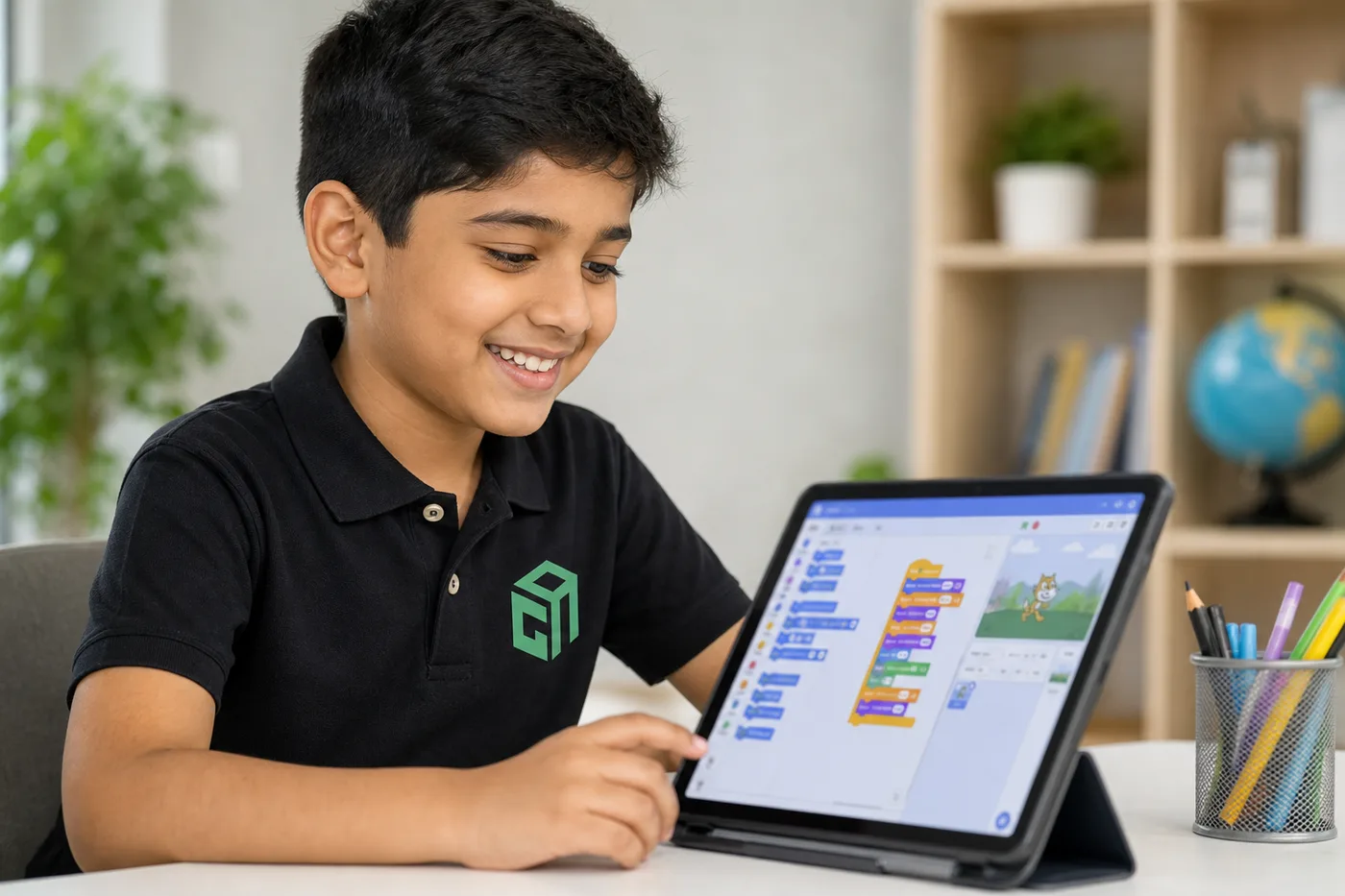
Grade 3–5 start with Scratch. Grades 5–8 add Python with AI and web. Grades 8–12 go deeper on AI/LLMs and robotics. Here is the GeekashramJr map with syllabus links.
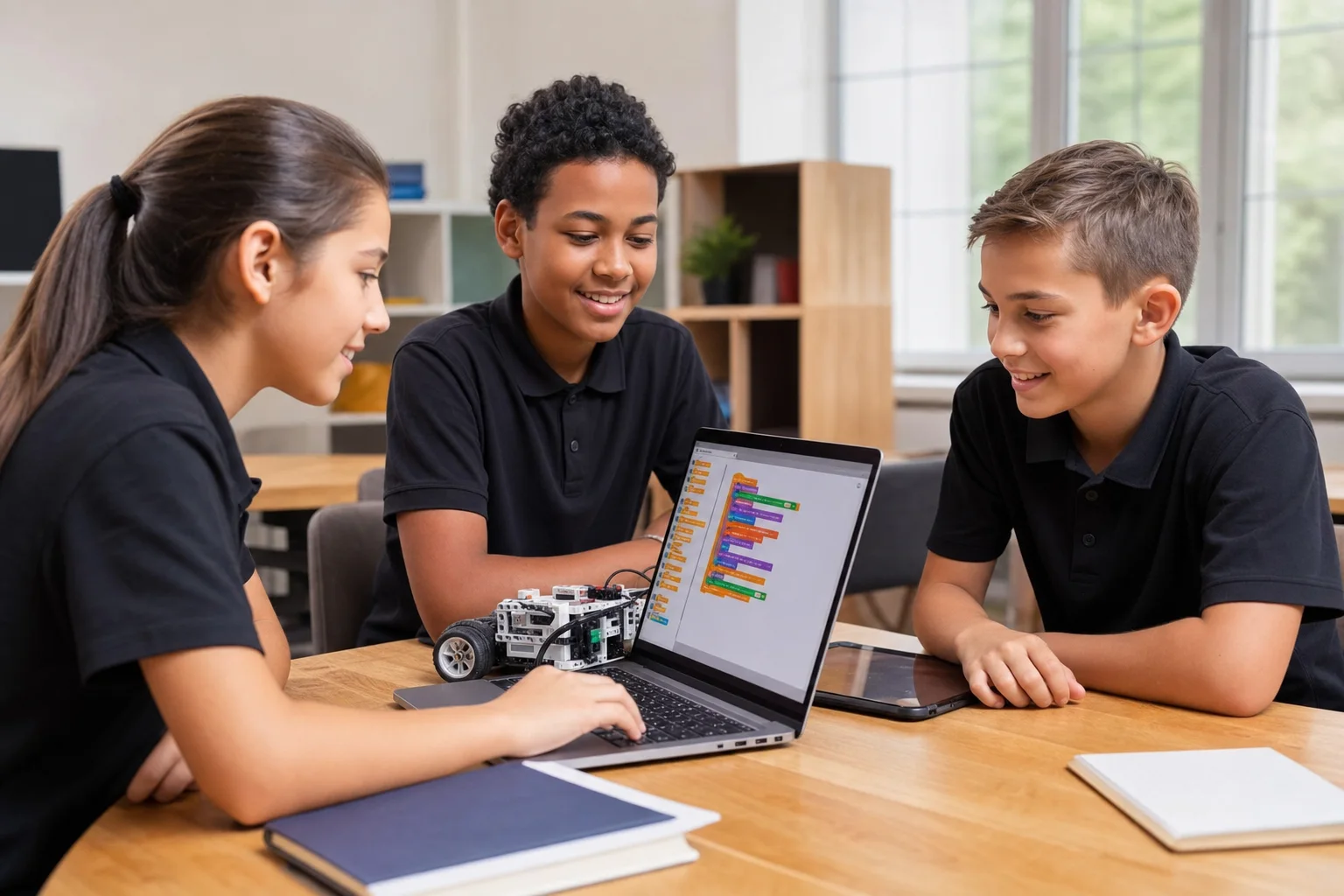
Scratch first for Grade 3–5. Python with AI when they can type. Web if they want something they can share in a browser. Use this decision tree, then read our Scratch vs Python guide.
Most kids can start coding around ages 7–8 with visual tools; typed languages like Python usually fit better from Class 5–6. Here is a clear age-by-age parent guide for when to start coding in 2026.
Straight answers for parents comparing live Entrepreneurship classes, syllabus depth, projects, and pricing.
GeekashramJr's Startup & Entrepreneurship course is a 30-hour live program for Class 6–12 students covering 11 modules: entrepreneur mindset, idea generation, customer discovery, MVP design, business model & costing, branding, legal basics, funding awareness, pitch deck creation, and a virtual Demo Day. Students keep a Startup Journal and leave with a validated idea, simple prototype, and pitch presentation.
Entrepreneurship is taught live module by module (31 live sessions). Parents can review the full syllabus table on this page — topics, projects, and typical session time per module — plus download the curriculum brochure.
Students complete mentor-guided projects throughout the course. By the end they typically have: Validated a startup idea with customer interviews and a completed Startup Journal; Built a no-cost MVP prototype and a business model canvas with pricing logic; Delivered a Demo Day pitch with slide deck and mentor feedback. Sample project screenshots and walkthroughs are shown above.
Entrepreneurship is for students in Class 6 to 12. Designed for Class 6–12. No prior business experience needed — a laptop or tablet, stable internet, and curiosity about problems around them is enough to start. Students keep a Startup Journal throughout the course.
GeekashramJr Explorers starts at ₹499 per session (Up to 5 students), Champions is ₹799 per session (Up to 3 students), and Super Mentors 1:1 is ₹999 per session. Prices are shown in INR. Try a session for current offers.
Classes are live online with GeekashramJr mentors — not passive video courses. Students get real-time feedback, debugging help, and project reviews in every session.
A 30-hour program where students spot problems, generate startup ideas, talk to customers, build an MVP, create a business model and pitch deck, and present on Demo Day.
The program is designed for Class 6–12 students who want to learn entrepreneur mindset, customer discovery, and pitching — with a Startup Journal built throughout the course.
Demo Day is the final showcase where students present a short pitch deck covering problem, solution, market, and ask — with live mentor feedback.
Students leave with a validated idea, simple MVP prototype, business model basics, and pitch practice. The goal is founder skills and confidence — not pressure to launch a company overnight.
Try a Entrepreneurship session for students Class 6 to 12. Meet a mentor, see the teaching style, and get a personalized plan for your child.
Try a session